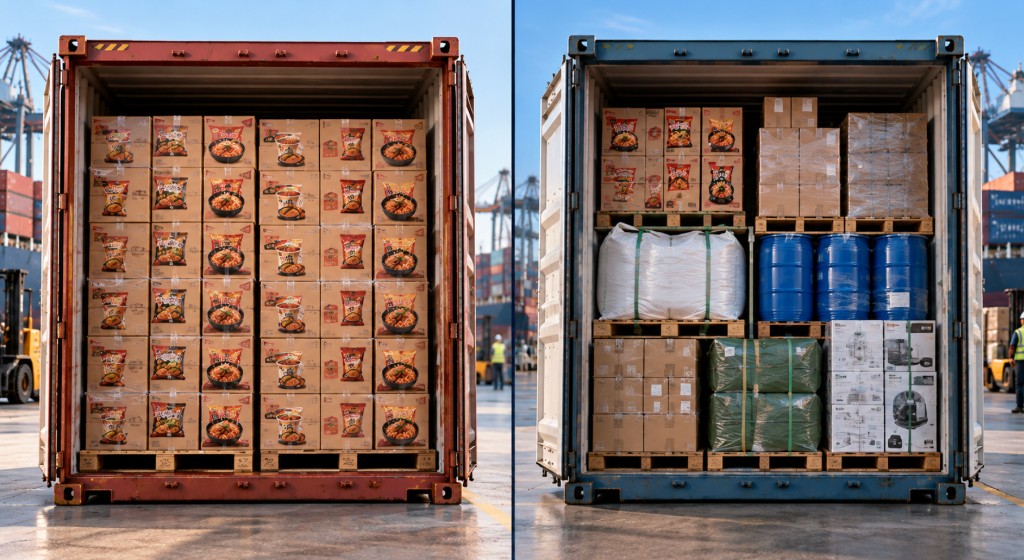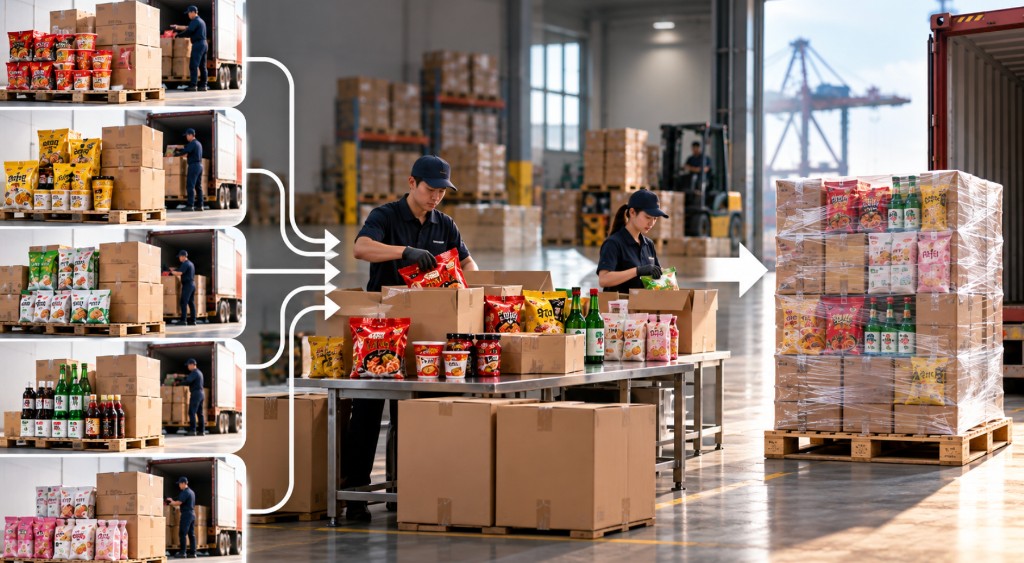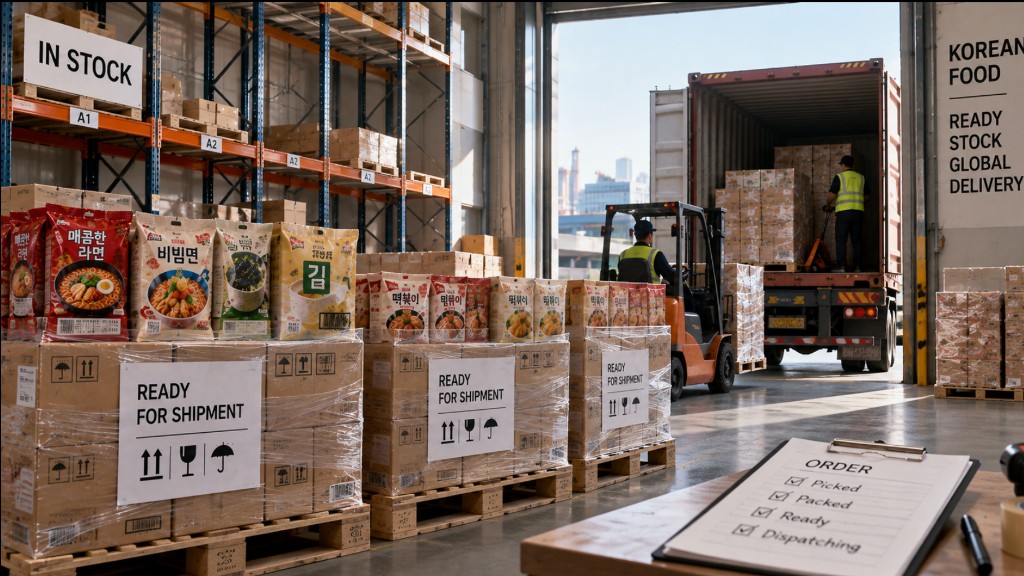

The starting point should therefore be expected sales, not empty container space. If a beverage sells around 100 cartons per month and a niche snack sells only 15 cartons per month, those two products should not receive the same allocation simply because they occupy similar space. If the importer expects the next shipment in eight weeks, the beverage may need close to 200 cartons plus some safety stock, while the slower snack may need only 30 or 40 cartons. Once the demand estimate is clear, the buyer can then see how those quantities fit into the available container.
This is where equal carton allocation usually creates trouble. An order with thirty products and twenty cartons of each looks tidy, but demand is rarely that tidy. A proven fast-moving SKU may deserve 60 cartons, a moderate seller 30 cartons and a new flavour perhaps 8 or 10 cartons. There is nothing wrong with an uneven order. In fact, a good mixed container should usually look uneven because the sales behind it are uneven.
A useful way to structure the order is to separate established products from test products. Products with sales history or confirmed customer demand should account for most of the volume. New products should be added in quantities small enough that weak performance does not create a serious inventory problem. If a 600-carton shipment contains 400 or 450 cartons of proven items and the balance is spread across new products, the importer has room to test the market without allowing experiments to dominate the container. The exact ratio will differ from one business to another, but the principle is simple: the quantity of a new product should reflect uncertainty.
Shelf life also needs to influence the mix. Two products may have the same expected monthly sales but still deserve different quantities if their remaining shelf life is different. If one product sells 30 cartons per month and arrives with twelve months remaining, while another sells at the same rate but has only six months remaining, the second product should normally be purchased more carefully. The importer should compare expected sales against the usable selling period after freight, customs, warehousing and retailer acceptance requirements. A product with attractive pricing can still become poor inventory if too much is purchased for the time available.
Container Space, CBM and Product Economics
Mixed-container planning often becomes too focused on CBM. Cubic volume is important, but it is only one constraint. Different Korean food categories behave differently inside a container. Beverages can be dense and heavy. Seaweed may be light but bulky. Chips and snack packets can consume a surprising amount of space. Sauces, canned products and glass bottles can create weight concentration. This is why carton dimensions and gross weight should be part of the product data for every SKU.
Once those figures are available, the importer can compare container space with sales value and margin. A product may be cheap to buy but expensive to transport if each carton consumes a large amount of space. Another product may cost more per carton but use the container much more efficiently. When space becomes limited, it can be useful to compare expected gross contribution per CBM rather than looking only at carton margin.
For example, if Product A earns USD 10 per carton and twenty cartons fit into one CBM, the expected contribution is around USD 200 per CBM. Product B may earn USD 18 per carton but only eight cartons fit into the same space, giving around USD 144 per CBM. Product B still may be important for the assortment, but the buyer now understands the cost of allocating space to it.
The biggest mistake usually appears near the end of the planning process. The container is almost ready, but there are still two or three CBM available. Someone decides that the space should be filled because the freight is already being paid. That can be sensible if the business has fast-moving products that will need replenishment soon. It is much less sensible when the spare space is filled with slow-moving or untested products simply to make the container look complete. Empty container capacity has a visible cost, but excess inventory creates storage cost, expiry risk, markdowns and working-capital pressure. The container does not have to be completely full to be commercially efficient.
Reorder Cycles Should Shape the Order
A mixed-container programme becomes much easier when the business works around a target reorder cycle. If the importer plans to bring a shipment every eight weeks, quantities can be built around approximately eight weeks of demand plus a sensible safety margin. A product selling 40 cartons per month may require around 80 cartons for the cycle, perhaps increased slightly for safety stock. A product selling 8 cartons per month may require only 16 to 20 cartons.
This keeps the assortment more balanced because most core products are being purchased against the same planning period. Without a common reorder cycle, one SKU may arrive with two months of stock and another with eight months simply because the supplier offered a good price or a high MOQ.
MOQ can distort the ideal order. The demand calculation may show that the importer needs 12 cartons, while the supplier requires 30. The fact that the supplier wants 30 cartons does not mean the buyer should automatically accept that quantity. The buyer has to decide whether the market can absorb those 30 cartons inside the usable shelf-life window. If not, the product may need to be reduced, postponed or removed from that shipment.
A product can be commercially attractive and still be unsuitable at a particular stage of the importer’s business because the minimum order quantity is too high.
The same logic applies to category allocation. It is tempting to create a container that looks like a balanced supermarket shelf, with equal quantities of snacks, beverages, sauces, confectionery and seaweed. The container should instead reflect the sales mix. If beverages account for 40% of actual sales, they may deserve a similar share of purchasing capital or container space. If sauces account for only 5%, there should be a clear reason before they are allowed to occupy 20% of the shipment.
The Warehouse Matters Too
The planning should not stop when the container is full. Once the shipment arrives, every SKU needs to be counted, stored, picked and tracked. A shipment containing eighty small product lines can create much more warehouse work than a shipment containing twenty larger lines, even if the total purchase value is the same.
The importer therefore needs to understand whether the warehouse can handle a very wide assortment. High SKU counts require more storage locations, more receiving work and more careful stock rotation. Shelf-life tracking also becomes harder as the number of products and batches increases.
This is another reason not to overload early shipments with too much variety. A catalogue that looks impressive online can become difficult to manage operationally if the underlying inventory system is not ready for it.
Use Every Shipment to Improve the Next One
A mixed container should become easier to plan after the first few shipments because actual sales data starts replacing assumptions. If one product repeatedly sells faster than expected, increase the quantity gradually. If another product remains in stock across several shipment cycles, reduce it. If a new product produces no repeat purchases, consider removing it instead of giving it another large allocation because there is room in the container.
The previous shipment should not automatically become the template for the next one. The order should change as the market changes.
Suppose Product A sells 80 cartons per month, Product B sells 40, Product C sells 15 and Product D is completely new. If the next shipment is expected in two months, Product A may need around 160 cartons plus safety stock, Product B around 80, Product C around 30 and Product D only a small test quantity. If Product C also has weaker shelf life, its quantity may need to be lower still. If Product D has a high supplier MOQ, the importer may decide not to include it at all.
That order will look uneven, but the business behind it is uneven.
Before confirming the final purchase order, it is worth looking at the entire container as one portfolio. Check how much of the shipment is proven inventory and how much is experimental. Look at which products consume the most CBM, which lines hold most of the working capital and which SKUs have the shortest commercial shelf-life window. If one bulky category takes 30% of the container but contributes only a small share of expected sales, that deserves attention. If half the products will last six months but the company normally imports every two months, the order may be too deep.
A good mixed container should make the next shipment easier to plan. Core products should approach reorder level at roughly sensible intervals, while slow products should not remain in the warehouse for several cycles. The importer does not need every SKU to perform perfectly. The important thing is to keep increasing quantities on products that repeatedly sell, reducing quantities on products that repeatedly sit and keeping new-product experiments small enough that the cost of learning remains controlled.
That is the difference between using a container to move products and using a container to build a workable import programme.