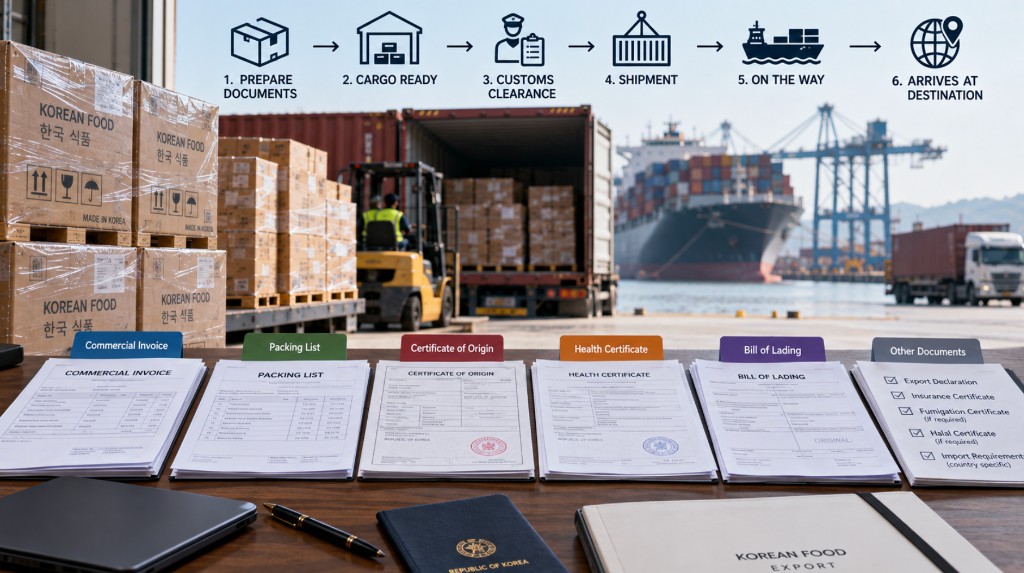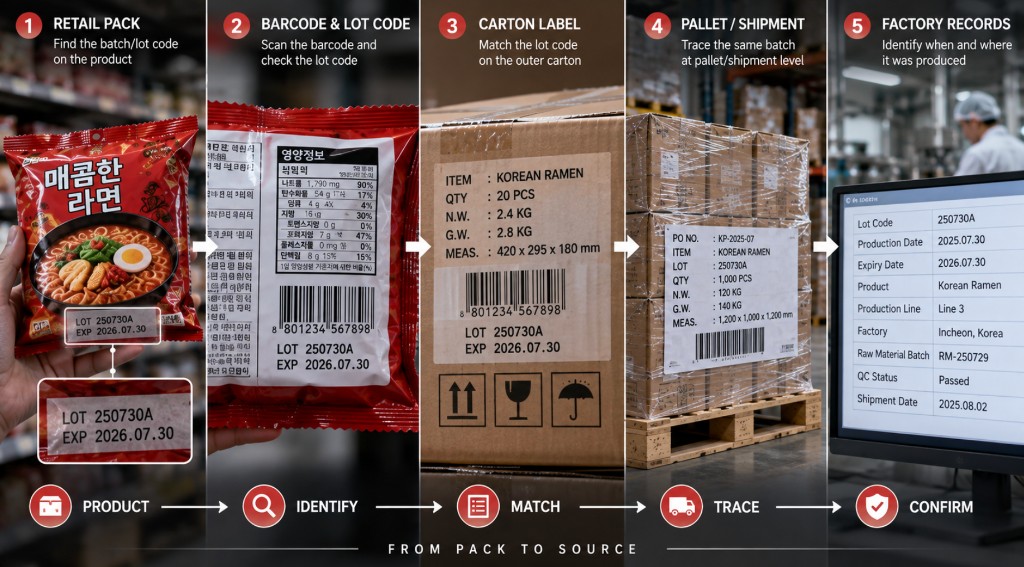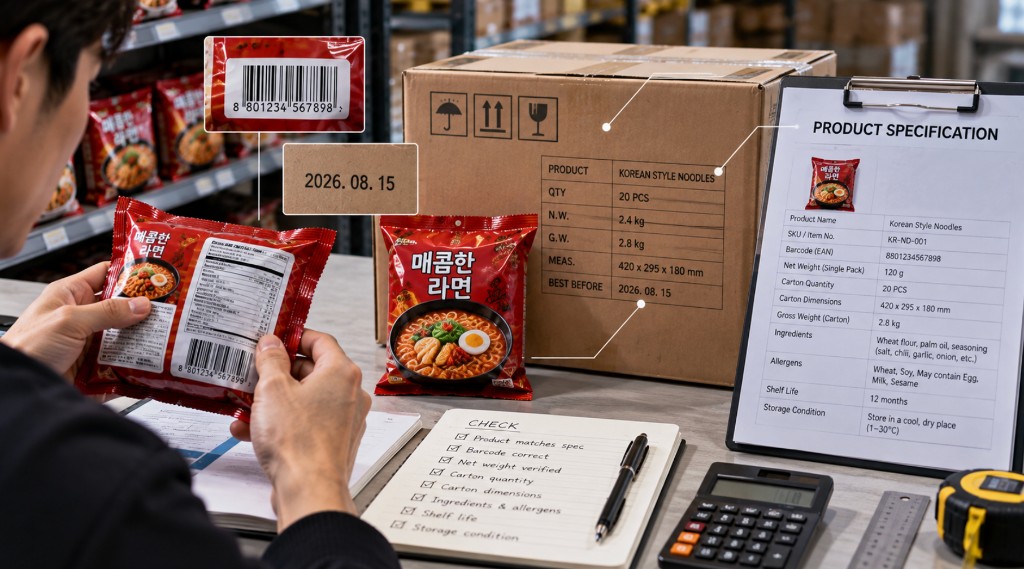


The importer needs to know exactly what has been certified, who holds the certificate, which factory it covers, whether it is still valid and whether the individual product being purchased falls within its scope. This sounds obvious, but certification problems often begin because buyers rely on a logo, a screenshot or a certificate belonging to the company generally without checking whether it applies to the goods in the shipment.
HACCP, ISO 22000 and Halal certification also answer different questions. They should not be treated as interchangeable quality marks. HACCP deals with food-safety hazards and controls in the manufacturing process. ISO 22000 is a broader food-safety management-system standard. Halal certification deals with conformity to the requirements of the relevant halal certification system, including ingredients and manufacturing practices. One certificate does not automatically replace another.
Start with the factory, not the brand name
A brand may sell ten or fifty products without manufacturing all of them itself. One snack may come from Factory A, beverages from Factory B and sauces from Factory C. The brand owner may hold several certificates, but the importer needs to know which manufacturing facility actually produces the SKU being purchased.
This becomes more important when an exporter sources Korean food from several manufacturers. The exporter may show a portfolio containing many certified products, but the certification normally belongs to specific manufacturers, facilities, processes or product scopes rather than to every item handled by the exporter.
When reviewing a certificate, compare the legal company name and factory address with the manufacturer shown in the product documentation. Check the certificate number, issue date, expiry date and scope. If the certificate lists product categories, make sure the category being imported is included.
A certificate belonging to another factory in the same corporate group should not automatically be assumed to cover the factory producing your goods.
The same principle applies when production has moved. A product may have been certified when it was manufactured at one site and later transferred to another facility. The buyer should make sure the current production location is covered.
What HACCP actually tells an importer
HACCP stands for Hazard Analysis and Critical Control Points. It is a preventive food-safety system built around identifying hazards in the production process and controlling them at points where those hazards can be prevented, eliminated or reduced to acceptable levels.
South Korea has its own HACCP certification framework administered within the national food-safety system. Food Safety Korea provides an official HACCP certification-status search, which allows buyers and other users to check certification information rather than relying entirely on supplier marketing material.
For an importer, a Korean HACCP certificate is useful evidence about the manufacturer’s food-safety controls, but the certificate still needs to be read properly. Check whether the certificate belongs to the facility manufacturing the product, whether it remains valid and what products or processes are included.
A buyer should also avoid assuming that HACCP means every commercial aspect of the product has been approved for the destination country. HACCP certification does not determine your local labelling requirements, import registration, tariff classification or whether a product can legally be sold in another jurisdiction. Those are separate questions.
The practical value of HACCP is therefore specific. It helps the importer assess the manufacturer’s food-safety system. It should be one part of supplier due diligence rather than a substitute for the rest of it.
ISO 22000 is broader than a HACCP certificate
ISO 22000 is an international standard for food-safety management systems. The current published version is ISO 22000:2018, although ISO is working on the next revision. ISO states that the standard applies to organizations throughout the food chain and incorporates HACCP principles within a broader management-system structure.
This difference is worth understanding.
HACCP focuses heavily on hazard analysis and control within food operations. ISO 22000 includes those principles but also addresses how the organization manages food safety more broadly, including management responsibilities, communication, system operation and continual control of the food-safety management system.
For a large importer, retailer or distributor, ISO 22000 may therefore provide useful information about the maturity of a manufacturer’s overall system.
It is still important to check who issued the certificate.
ISO itself does not certify companies. Certification is normally performed by third-party certification bodies. ISO specifically notes that organizations can implement ISO 22000 without becoming certified and that ISO does not perform the certification itself.
If a supplier says, “We are ISO certified,” ask for the certificate rather than treating the statement as complete information. Check the certification body, company name, manufacturing location, scope and validity dates.
The scope deserves particular attention. A company could have ISO 22000 certification for one facility or category while producing another product elsewhere. A buyer importing products from several factories should check each relevant manufacturing site.
Halal requires a different type of verification
Halal is where buyers need to be particularly careful about assumptions.
A supplier may describe a product as pork-free, alcohol-free, vegetarian or made without certain animal ingredients. None of those descriptions automatically means the product is Halal certified.
Halal certification normally involves requirements covering the ingredients, raw materials, processing methods and manufacturing environment according to the rules of the certifying system. The certificate should therefore identify the organization providing the certification and the scope or products covered.
For an importer, the first question is whether the actual SKU is certified.
If a Korean manufacturer produces thirty products and ten appear on a Halal certificate, the remaining twenty should not automatically be treated as certified because they are produced by the same company.
This is especially important for products containing flavours, emulsifiers, gelatin, enzymes, meat derivatives or other ingredients whose source may need closer examination under a particular halal standard.
The second question is whether the certifying body is accepted for the destination market. Halal recognition is not something an importer should assume is identical worldwide. Different markets, authorities and customers may recognize different bodies or impose their own requirements. Recognition can also change, which is why the importer should confirm the position for the intended destination rather than relying on an old supplier presentation.
That point is not theoretical. Recognition of Korean halal-certification bodies can differ between external accreditation or recognition systems, so destination-specific verification matters.
For a distributor supplying supermarkets in a Muslim-majority market, the correct process is therefore to check what the importing country’s regulator or major customers require, then verify whether the manufacturer’s current certificate satisfies that requirement.
Check the certificate against the product list
One of the easiest ways to make certification review more reliable is to connect every certificate to the product master.
Suppose an importer handles 200 Korean food SKUs from fifteen manufacturers. Instead of storing certificates in one folder and hoping someone remembers which products they belong to, the product database can record the manufacturer, manufacturing site, certification type, certificate number, issue date, expiry date and applicable products.
That creates a much cleaner purchasing process.
When the importer prepares a new shipment, products with expired or unclear certification can be identified before the purchase order is approved. If a certificate expires next month and the importer is buying six months of inventory, the purchasing team can ask the supplier whether renewal is already underway.
This also prevents outdated certificates from circulating internally for years.
Certificates should be reviewed periodically because manufacturing arrangements change. A product can move factories. A certification body can change. The scope can be expanded or reduced. The document used during the first order may no longer describe the situation two years later.
Do not confuse certification with product approval
A manufacturer can have strong HACCP and ISO 22000 systems and still produce an item that is unsuitable for a particular destination.
The product may contain an ingredient that is restricted locally. The nutrition panel may need a different format. The package may require local-language information. The importer may need product registration or another approval before sale. A Halal certificate accepted in one market may not satisfy another buyer or authority.
Certification should therefore answer a defined question.
HACCP helps the importer understand the manufacturer’s hazard-control system.
ISO 22000 helps the importer understand the broader food-safety management system.
Halal certification helps establish conformity with the applicable halal requirements within the certificate’s scope.
None of them answers every import question.
This distinction becomes very important during supplier selection because certifications can create a false sense that due diligence has already been completed.
A certificate can be genuine and still be irrelevant to your SKU
Imagine a Korean manufacturer sends a valid HACCP certificate. The company name is correct, the certificate has not expired and the document is authentic.
The importer is purchasing a beverage.
The certificate covers only a different production line used for sauces.
The certificate itself is genuine. It simply does not prove what the buyer assumed it proved.
The same issue can arise with ISO certification when several factories operate under similar company names, or with Halal certification when only certain products are listed.
The solution is to ask a very ordinary question:
Does this certificate cover the exact product and facility supplying our order?
That single check prevents a surprising amount of confusion.
Buyers should keep copies, not screenshots
Supplier catalogues often contain certification logos or small images of certificates. These are useful during initial sourcing, but they are poor records for serious purchasing.
Once a product enters the shortlist, request the actual certificate file.
The document should be readable and complete. Record the certificate number and validity period. Where an official database or verification facility exists, use it.
For Korean HACCP information, Food Safety Korea provides official certification-status information. ISO certificates need to be checked through the issuing certification body or relevant accreditation system, because ISO does not maintain a universal list of companies that it has certified, since ISO itself does not certify companies.
Halal verification should be performed through the relevant certification and destination-market recognition channels.
This takes slightly more time during onboarding but saves repeated questions later.
Certifications should influence sourcing, not replace sourcing
A supplier with appropriate certifications may be easier to evaluate, but commercial purchasing still comes down to the product itself.
The importer still needs to review price, MOQ, shelf life, carton configuration, ingredients, documentation, lead time and expected landed cost.
A highly certified product that arrives with inadequate shelf life or an unrealistic MOQ can still be a poor purchase.
Likewise, certification should not become a box-ticking exercise where the purchasing team simply asks whether a supplier has “HACCP + ISO + Halal” and gives the supplier a pass.
The better approach is to decide which certifications or controls are actually required for the product and destination, then verify them properly.
A buyer sourcing conventional snacks for one market may need one set of documents. A distributor supplying Halal-certified products into another market may need a much stricter set. Large supermarket chains may add their own vendor requirements on top of government rules.
The certification requirement therefore belongs inside the purchasing specification.
Before ordering, the buyer should know what certification is required, who must issue it, what products it needs to cover and how long it must remain valid.
That makes supplier evaluation much more precise.
A logo tells you what to ask about. The certificate tells you what has actually been certified. The scope tells you whether it applies to the product you are buying.