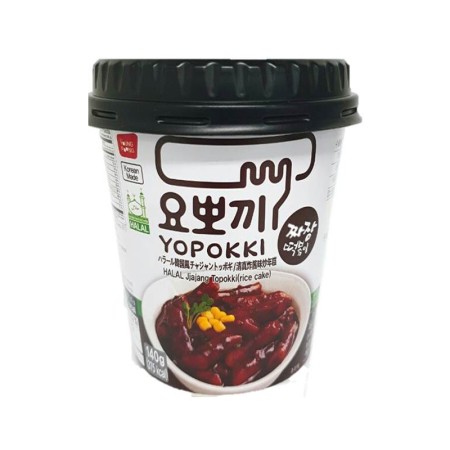

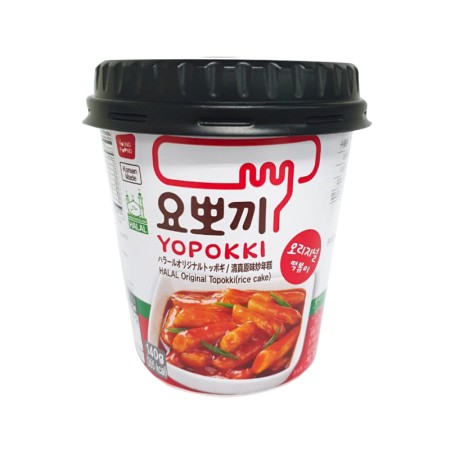
KCN lists YOUNGPOONG Yopokki Original Tteokbokki Cup HALAL 120g x 30, barcode 8809054401519, under Tteokbokki & Rice Cakes. The KCN catalogue records room-temperature storage, the Halal tag and 30 cups per carton. Thirty 120g cups contain 3.6 kg of declared food net weight.
A Korean wholesale listing for the same barcode publishes a 4.8 kg gross carton weight, 480 × 300 × 235 mm case dimensions and 0.034 CBM per carton. The 1.2 kg difference between the 3.6 kg food net weight and the listed 4.8 kg gross case weight is the cups, lids, inner components and shipping carton rather than additional food. Ten such cartons would occupy roughly 0.34 CBM before palletization, which is much more useful to a freight buyer than simply knowing that one cup weighs 120g.
Tteokbokki changes the technical story
The product should not be described as a Korean “noodle cup” simply because it shares shelf space with instant noodles. The main eating component is rice cake. Current European wholesale data for barcode 8809054401519 describes the product as a rice-cake cup with a dry Original sauce mix, prepared by adding water and heating. Ingredient listings for the same barcode show rice as the principal rice-cake ingredient and a seasoned sauce system containing, among other things, soy-based components and wheat-containing ingredients in some market declarations.
Those public ingredient listings should still be treated as reference material rather than copied blindly into KCN’s export label. Recipes and declarations can change, and different destination packs may carry different wording. The current export specification and actual package being supplied should control the ingredient and allergen file.
The product format also explains how it can remain in the ambient supply chain. This is not a tray of refrigerated fresh tteokbokki. The KCN catalogue and external wholesale data both identify the cup as room-temperature stock. That removes the cost of chilled warehousing and reefer freight, which is a significant commercial difference when an importer is trying to build a Korean ready-meal category.
Shelf life needs a batch check because public listings disagree
One Korean wholesaler currently lists 12 months of shelf life for barcode 8809054401519. Another overseas distributor lists 15 months for the same barcode. That discrepancy is exactly why the KCN article should not hard-code a shelf-life promise without checking the stock being offered.
There are several possible explanations for public differences: a specification revision, different production periods, different destination packs, or simply stale distributor data. The practical response is the same. KCN should quote the batch with its actual printed date or confirmed remaining shelf life.
That is stronger than pretending every 120g Yopokki cup in the world has one immutable shelf life.
Halal should be treated as a document, not a decorative tag
KCN’s catalogue marks the product Halal, and trade listings also market this exact barcode as Halal. A buyer serving a Muslim-majority market should still ask for the current certificate applicable to the product and production facility.
Certification acceptance can depend on the destination country, certifying body and retailer. The blog should therefore say that the SKU is catalogued as Halal and invite the buyer to request current supporting documentation. It should not say that the product is automatically approved for every halal market.
The same principle applies to the product’s customs classification. Rice cakes with sauce can be treated differently from simple dried noodles depending on the destination tariff schedule and composition. The importer or customs broker should classify the exact goods.
The Original cup is part of a much wider Yopokki system
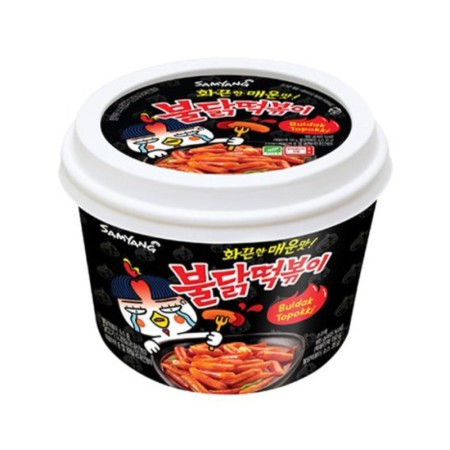
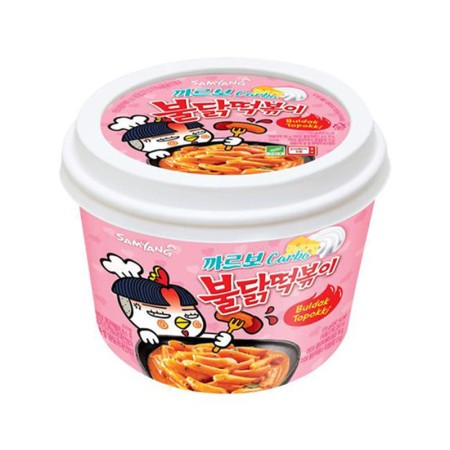
KCN also lists Original pouch formats, Spicy, Jjajang, Rose Spicy and other Yopokki cups. That gives a buyer several ways to build the category. The 120g cup is the convenience format; larger pouches serve a different household occasion.
A first shipment does not need every flavor. Original can act as the reference SKU, with one or two differentiated sauces beside it. Because the cartons have published cube and weight data, the importer can also model how much space a Yopokki range will occupy before ordering.
For the current KCN catalogue, the core reference is 120g, barcode 8809054401519, 30 cups per carton, room-temperature storage, Halal tag. Before the PO is finalized, verify the current certificate and the actual batch shelf life.