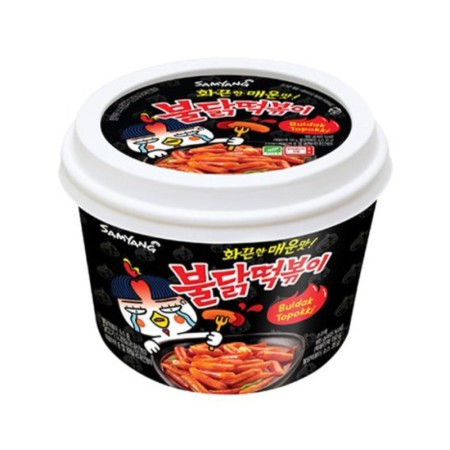

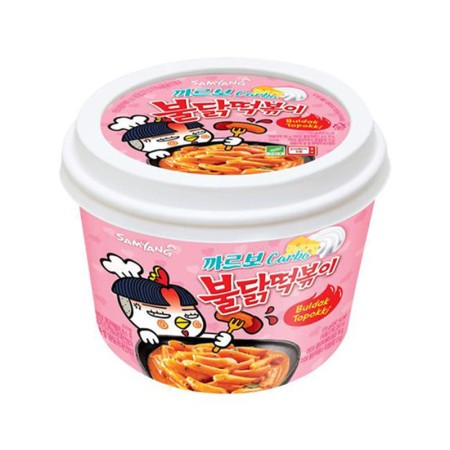
Samyang lists the Carbonara product as 179g, 445 kcal, eight months shelf life and an October 2018 launch. The food is divided into rice cake, a sterilized sauce, and a separate finishing powder classified as a compound seasoning.
That extra finishing powder is not a trivial packaging detail. It is part of how the creamy Carbonara profile is built. The product therefore contains three functional food components, not simply the Original sauce with another name printed on the lid.
KCN lists SAMYANG BULDAK TTEOKBOKKI CARBONARA 179g, barcode 8801073910933, with 16 units per carton. Sixteen 179g units contain 2.864 kg of declared net product weight before packaging.
The manufacturing split needs to be visible in the technical file
Samyang’s current Korean specification identifies Youngpoong as the manufacturer of the rice cake component, while Samyang Foods produces the sauce and finishing powder.
That can matter when an importer is preparing factory declarations, product-registration documents or certification files. A destination authority may ask who manufactured a component, and “Samyang” as the brand name is not always a complete answer.
The packaging specification is similarly component-based. The container, rice cake and sauce use polyethylene on the contact layer, while the lid, spoon and finishing-powder package use polypropylene.
This level of detail is useful for importers facing packaging or material reporting requirements and also reinforces that the product should be treated as a meal kit rather than as a conventional instant noodle.
Carbonara changes the allergen review
The creamy profile means the importer should pay close attention to the exact ingredient and allergen file, especially milk-related declarations. Do not transfer Original tteokbokki’s ingredient sheet to Carbonara simply because both are 2018 Buldak rice-cake products.
The finishing powder is another reason the two technical files must stay separate. If the destination label requires component ingredients or allergens to be declared in a particular order, the export specification needs to show how the rice cake, sauce and powder are composed.
This is also where product copy should stay disciplined. The article can explain that Carbonara uses a separate finishing powder and a creamy-spicy product concept. It does not need generic language about “an irresistible fusion of East and West.”
Eight months gives more room than the Buldak cups, but it still needs batch control
The Korean product page gives Carbonara Tteokbokki an eight-month shelf life, longer than the six months on several Buldak noodle cups.
That extra time can be commercially useful for sea freight and a new-category launch, but it should not become an excuse to ignore batch age. A distributor still needs to know how much time remains at destination arrival and whether the retailer imposes a minimum remaining-life requirement.
The heavier 179g format also changes freight. Sixteen units equal 2.864 kg of food net weight, meaning a carton carries considerably more food mass than a Buldak cup case. Current gross weight and carton cube should still be confirmed because the container and component pouches add packaging.
Carbonara Tteokbokki can sit beside Original as a genuinely differentiated second SKU. If the buyer adds Rose as well, the range should be sized according to retailer demand rather than split equally for visual symmetry.
For KCN, the current reference is 179g, barcode 8801073910933, 16 units per carton.