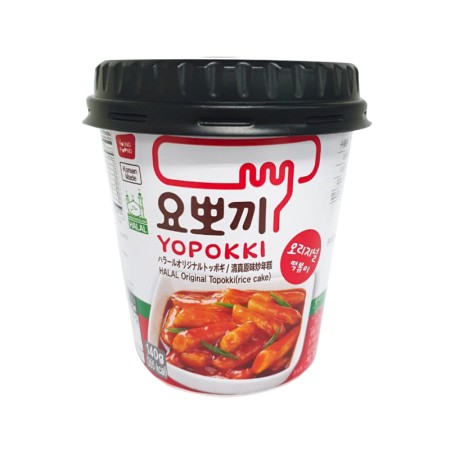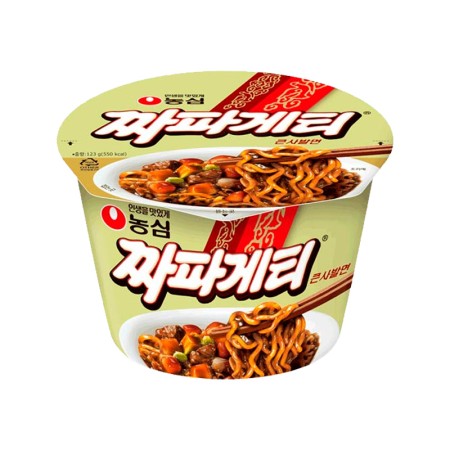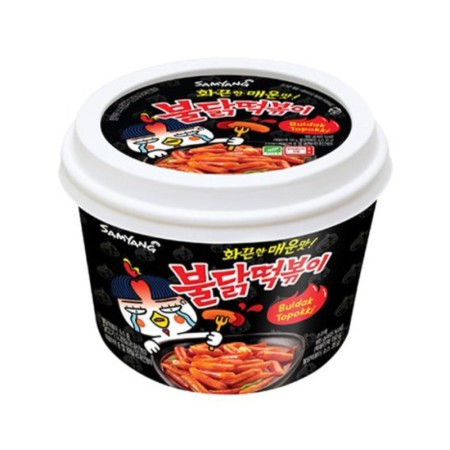

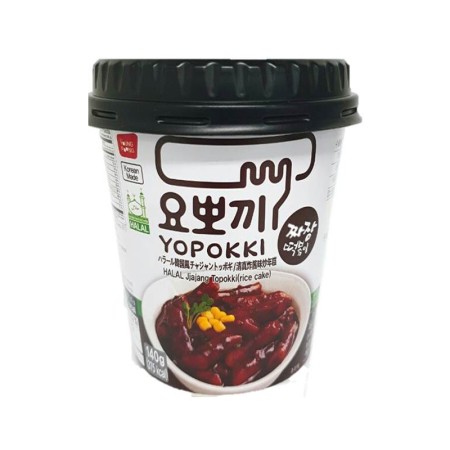
KCN lists YOUNGPOONG Yopokki Jjajang Tteokbokki Cup HALAL 120g x 30, barcode 8809054401533, with room-temperature storage, a Halal tag and 30 units per carton. In part of the catalogue, however, it is grouped under Instant Noodles & Ramyun / Cup & Bowl Noodles. It is not a noodle cup. It is a rice-cake product with jjajang sauce. That category should be corrected before KCN uses the data for website filters, SEO pages or automated feeds.
The exact same barcode appears in Korean wholesale data as a 120g Yopokki Jjajang Tteokbokki Cup. The published case specification is 30 cups, 4.8 kg gross weight, 480 × 300 × 235 mm and 0.034 CBM. As with the Original cup, the food net mass across 30 units is 3.6 kg.
The physical logistics are therefore almost identical to Original. The sauce is where the product becomes technically different.
Jjajang is not a cosmetic flavor change
Current ingredient declarations for barcode 8809054401533 describe a rice-cake component and a jjajang sauce built around chunjang, the dark fermented bean/wheat paste used for this style of sauce. Public declarations for this SKU identify wheat and soybean components in the sauce.
Those ingredients matter to an importer because the allergen profile and local product name need to be correct. A retailer selling “Jjajang Tteokbokki” should not reuse the Original Yopokki ingredient file simply because both cups are 120g and come from the same brand.
The local-language description should also explain the product without overdoing it. “Rice cakes with Korean-style jjajang sauce” is more useful to a supermarket buyer than a paragraph about the cultural history of black-bean noodles.
The cup can be modeled as a real freight unit
Thirty cups at 120g equal 3.6 kg of food. The listed gross case is 4.8 kg. At 0.034 CBM, the case has a relatively low product-weight-to-volume ratio compared with dense sauces or canned products.
That does not make it inefficient by default. It simply means that a buyer should model it with the rest of the load. A mixed order of Yopokki cups, ramen cups and large snack bags can become cube-heavy well before it becomes weight-heavy.
Because Original and Jjajang use the same published carton dimensions, an importer can compare the flavors commercially without introducing a different case geometry into warehouse planning.
Twelve months is the published trade shelf life, but KCN should quote the batch
The exact trade listing for barcode 8809054401533 gives 12 months of shelf life and room-temperature storage. That is useful for planning, particularly compared with six-month noodle cups.
The purchase order should still record the actual remaining life of the offered stock. A 12-month technical specification does not tell the buyer whether the cartons in the Korean warehouse were produced last week or four months ago.
For a new market, that difference can decide whether a 30-carton order is comfortable or excessive.
Halal documentation and destination acceptance remain separate questions
The KCN catalogue marks the product Halal. The buyer should request the current certificate and confirm that the certifying body and manufacturing scope satisfy the destination or retail customer.
The same rule should be applied flavor by flavor. Original and Jjajang may both be catalogued as Halal, but KCN should keep the certificates and technical files attached to the exact SKUs instead of maintaining one generic “Yopokki Halal” folder.
For KCN, the article should also trigger a catalogue cleanup: move barcode 8809054401533 out of the noodle category and into Tteokbokki & Rice Cakes. Clean data makes the website, quotations and buyer search experience better.