
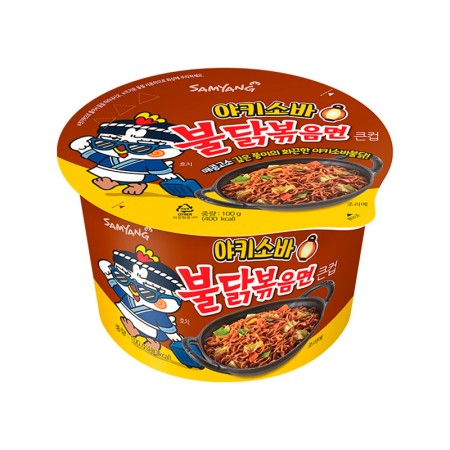
KCN lists SAMYANG BULDAK RAMEN BIG CUP YAKISOBA 100g, Korean name 삼양 불닭볶음면 큰컵 야키소바 100g, barcode 8801073216099, with 16 cups per carton. Sixteen cups contain 1.6 kg of declared food net weight.
The product takes Buldak’s stir-fried spicy-noodle architecture and moves it toward a yakisoba-style sauce profile. That matters because yakisoba is not soup ramen. The product belongs to the drained/mixed or sauce-coated side of instant noodles, and its preparation directions should be followed exactly.
The article should not imply that the product is Japanese-made. It is a Korean Samyang product using a Japanese-style yakisoba concept. Origin, brand nationality and cuisine inspiration are separate things.
The exact current product specification should be checked for weight, calories, shelf life and launch date before those fields are hard-coded. KCN already has the barcode and case count, which are enough to lock the SKU identity.
The ingredient file deserves particular attention because yakisoba sauce can use soy sauce, Worcestershire-style seasoning, sweeteners, spices and other components that differ materially from Original Buldak sauce. The allergen statement should therefore be built from the exact Yakisoba pack, not from another Buldak flavor.
The cup format again creates dimensional freight. Sixteen rigid cups contain only 1.6kg of food. The actual carton cube will determine whether the SKU makes sense in LCL relative to packet Buldak products.
Commercially, Yakisoba is a good range-extension product because it changes the eating format rather than only changing cream or cheese intensity. A retailer carrying Original, Carbonara and Yakisoba has three clearly differentiated propositions.
For KCN, the current hard reference is 100g, barcode 8801073216099, 16 cups per carton. Exact manufacturer shelf life, calorie value, packaging materials and current preparation method should be attached before publication.