
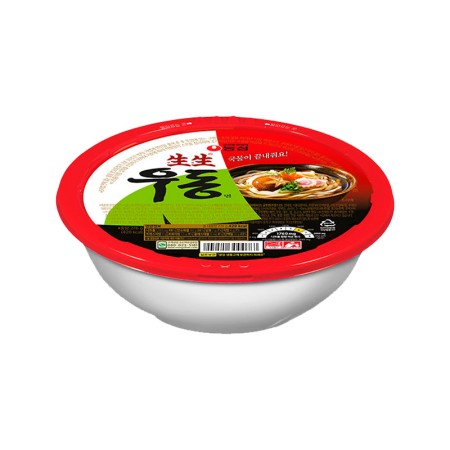
Nongshim’s Korean product page classifies 생생우동용기 276g as 숙면(살균제품), a sterilized cooked or high-moisture noodle product. The company’s brand page explains the underlying technology directly: Nongshim’s fresh-style noodles are cooked noodles treated with safe organic acids for preservation. Because they retain much more moisture than dried ramen, they cook quickly and have a texture closer to fresh noodles.
That is the product story.
KCN lists NONGSHIM Udon Noodle Cup 276g, barcode 8801043015523, with 12 bowls per carton. Twelve units represent 3.312 kg of declared food net weight. The KCN source data also gives a case-related figure of 12 units, while Nongshim’s own mall sells a domestic 12-unit carton of the same 276g product.
Nongshim’s brand page lists the product at 276g, 430 kcal, six months shelf life, with an original launch date of 2 December 1995. That makes it older than Shin Cup and very different from newer instant bowl extensions.
The technical contrast with fried ramen matters. A fried noodle block is deliberately dried to low moisture, then rehydrated. The Udon Cup starts with a moist, sterilized noodle. That changes weight, texture and preservation. The buyer is paying to ship water already present in the noodle, which is one reason the 276g unit is so heavy.
This also affects freight. A case containing 12 bowls carries more than 3.3 kg of food before packaging. Compared with a 75g cup noodle, the udon case is denser by food weight, but the bowl itself is also physically large. The importer should ask for current gross carton weight and dimensions before choosing whether this SKU belongs in an LCL consolidation.
The broth is another technical point. Udon products commonly use soy and fish-based seasoning systems, and the exact current ingredient file should be checked for wheat, soy, fish or other allergens. KCN should never reuse allergen data from Nongshim Tempura Udon or another udon SKU simply because the bowl style is similar.
The six-month shelf life is notable because this is a high-moisture product. The preservation technology allows it to remain shelf stable without being treated like frozen udon, but the batch clock is still short enough that import timing matters.
For retail, the 276g bowl is closer to a full meal than a light cup snack. That can support a higher shelf price, but only if the destination market understands the distinction. The article should explain that this is a sterilized moist udon product, not “premium ramen.”
For KCN, the core reference is 276g, barcode 8801043015523, 12 bowls per carton, 430 kcal, six-month shelf life, sterilized high-moisture noodle technology.