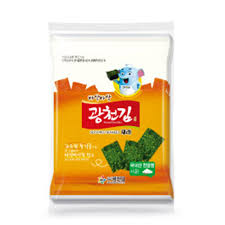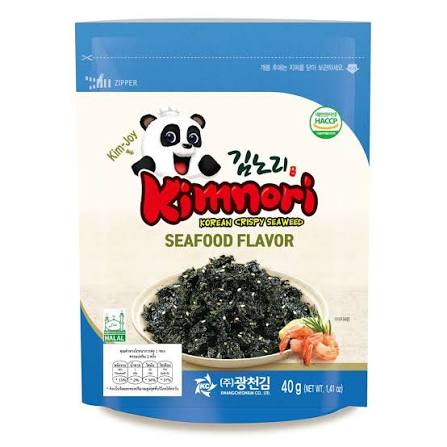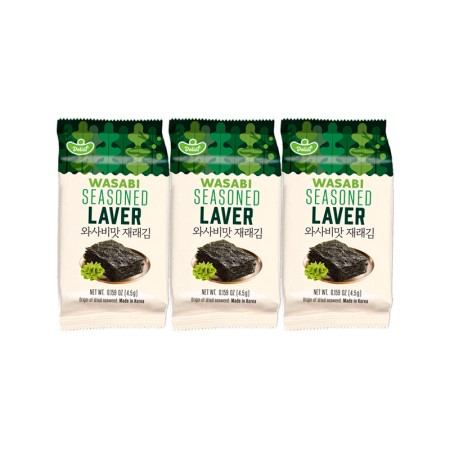

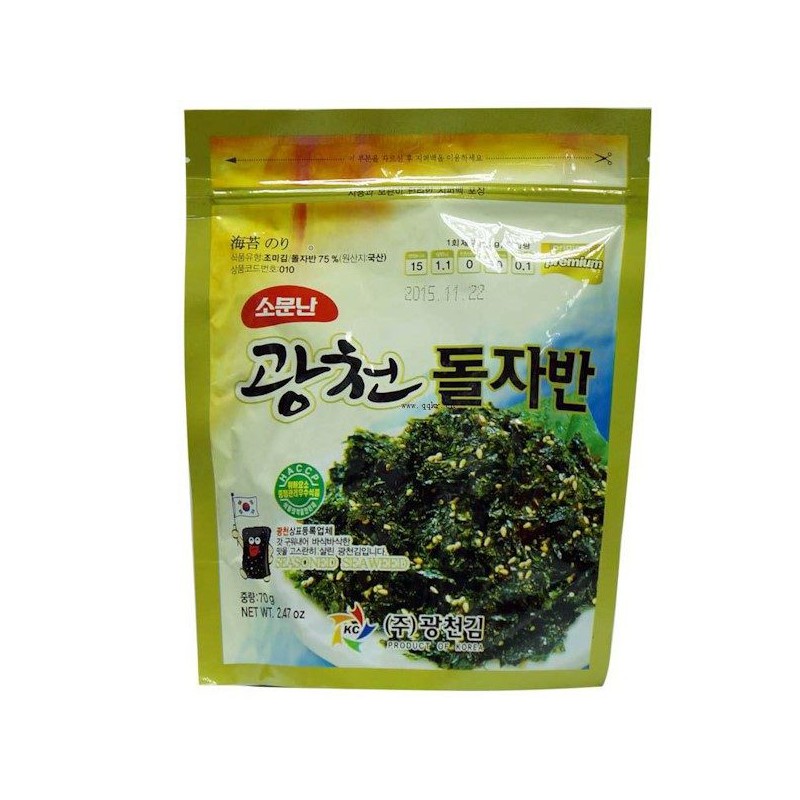
KCN lists the product under Seaweed / Seasoned Seaweed and marks it Dry. Current UK retail data sells Kwangcheon Sprinkle Topping Seasoned Seaweed 400g, confirming that at least one current commercial format is a large 400g bag rather than a 4g or 5g tray.
That changes the commercial role completely. A 400g bag is not mainly an individual snack. It is a pantry or foodservice-style topping product intended to be sprinkled over rice, noodles or other foods.
The format also changes freight efficiency. Compared with dosirak seaweed, the flakes can be packed more densely because they do not need to preserve perfect full sheets. A 400g bag still contains a lot of air, but the product-to-packaging ratio is far better than a carton containing dozens of rigid trays.
The ingredient file should distinguish seaweed powder/flakes from seasoning. KCN’s English name says “Seasoned Sprinkle Topping,” so oil, salt, sesame or other components may be present. The exact current formula and allergen declaration should be used.
Moisture and oxidation remain important. Flaked seaweed has more exposed surface area than full sheets, so compromised packaging can affect texture and flavor quickly. Large-format bags should have clear after-opening storage guidance because the customer may not consume 400g at once.
KCN should also improve the product data before building the final page. The current catalogue entry does not expose a barcode, exact pack size or carton quantity. Those details need to be attached to the exact Famous Kwangcheon 400g format rather than inferred from a retailer.
The strongest buyer story is therefore about use and format: this is a large seasoned seaweed topping, not another lunchbox tray. That makes it suitable for household pantry use and potentially foodservice channels.