
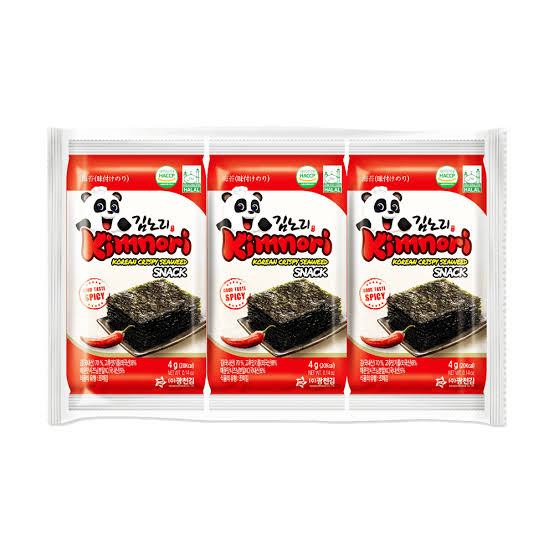
An Australian Korean-food catalogue lists Kimnori Seasoned Seaweed (Spicy) 3PK as 3 x 4g, with 24 retail packs per case. That means one retail unit contains 12g of seasoned seaweed, and a full case contains only 288g of food net weight.
That number immediately explains the logistics. Seaweed is not a heavy-freight product. It is a volume, moisture and packaging-integrity product.
The retail packs depend on a barrier film and sealed tray/pack system to keep roasted seaweed crisp. Once humidity enters the package, texture can collapse quickly. Seasoned seaweed also contains oil, which creates an oxidation issue. Dongwon recently described exactly this problem in another seasoned-seaweed line when introducing nitrogen flushing: oxygen promotes oil oxidation and off-flavors, while moisture damages crispness. Kimnori is a different brand, so that process should not be claimed for this SKU, but the underlying chemistry is the same reason packaging quality matters so much.
The spicy seasoning needs its own ingredient file. KCN also carries Kimnori Original, Teriyaki, Pizza, Butter Cheese and Curry. The temptation is to build one generic “Kimnori seaweed” label. That would be bad data management. Each seasoning can introduce different allergens, flavoring ingredients and additive declarations.
The retail format is also commercially interesting. A 3 x 4g dosirak pack is not a large full-sheet nori product for sushi preparation. It is a small portioned seasoned-seaweed format, usually eaten with rice or as a snack. That distinction affects category placement. A supermarket can list it with Korean grocery, seaweed snacks or rice accompaniments, but the buyer should decide one role rather than leave the product floating between categories.
Freight should be calculated using carton dimensions rather than food kilograms. A case containing only 288g of seaweed can still occupy meaningful cube because each retail pack needs rigid or semi-rigid protection. If a buyer fills an LCL shipment with seaweed and chips, the shipment may become volume-limited very quickly.
Shelf life and packaging gas should be verified from the current Kimnori technical file. The external catalogue confirms the pack configuration, not the manufacturing specification. KCN should obtain the barcode, case dimensions, gross weight, shelf life and exact ingredient/allergen declaration before the page is finalized.
The strength of this SKU is range architecture. Spicy can sit beside Original as the second clear flavor. Teriyaki or Butter Cheese may make sense in specialist retail. Six flavors do not need equal inventory.