
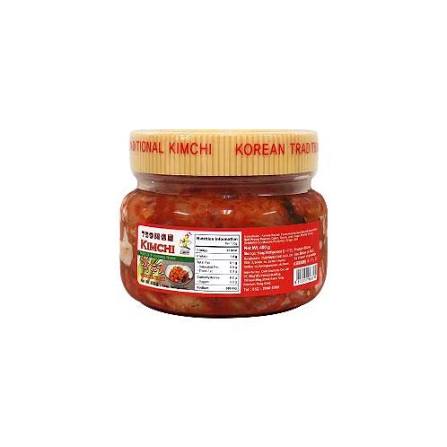
KCN lists barcode 8802257066820, tags it Halal, Vegan / Vegetarian, and specifies refrigerated storage at 0–10°C. Twelve 400g packs equal 4.8 kg of declared food net weight.
Daekwang F&G’s export business includes cubed radish kimchi as a core category, and the company’s public export catalogue lists 400g PET formats with cold storage and a six-month shelf-life framework across this part of the range. GobizKorea also lists a 400g PET x 12 Cubed Radish product directly from Daekwang F&G.
The technical difference is the vegetable itself. Cubed radish, or kkakdugi-style kimchi, has a denser, firmer plant structure than sliced napa cabbage. That affects texture, brine movement and how the product changes during fermentation. A retailer may see both products as “kimchi,” but the eating experience and merchandising are different enough that they deserve separate product pages.
Cold-chain control remains the central export issue. The product continues to ferment after packing, and temperature determines how quickly acidity and gas develop. The buyer should not simply accept “refrigerated” as sufficient detail. The shipping plan should specify reefer temperature, cold warehouse conditions and handling time during customs or port dwell.
A 400g PET jar or tub is also an important packaging choice. Fermented radish can generate pressure, and the importer should ask about container design, headspace and any packaging instructions from the manufacturer. Leaking or swollen packs can become a retail rejection issue even if the product is still within its date.
The vegan claim deserves exact verification. Traditional radish kimchi can use fish sauce or shrimp-based seasoning depending on the recipe. This KCN SKU is explicitly catalogued as Vegan / Vegetarian, so the current ingredient specification should show how the producer achieves that formulation.
The Halal claim should be managed the same way. Daekwang has a documented history of Halal certification, including JAKIM certification in its company timeline. That supports the manufacturer story, but the buyer still needs the current certificate applicable to barcode 8802257066820.
The case is heavy enough that reefer freight should be modeled by both weight and pallet utilization. Twelve units already contain 4.8 kg of food, and rigid PET packaging adds more gross weight. If the importer brings cabbage, radish and mixed kimchi together, the load becomes dense quickly.
The commercial reason to carry both sliced cabbage and cubed radish is category breadth. One is the familiar cabbage format. The other gives a crunchy radish product. The buyer should not split quantities equally just for visual symmetry; opening volume should follow retailer demand.
For KCN, the hard reference is 400g x 12, barcode 8802257066820, refrigerated 0–10°C, Halal, Vegan / Vegetarian, six-month cold-storage export framework.